
7
Tainui Group Holdings
Annual Report
2012
decisions.” Agreement was
eventually reached for non-
strategic lands to be sold but
on condition that the company
would acquire other (more
productive) parcels of land
over time to compensate, and
a process was established
to help guide future land
decisions. Key parcels, such
as
were also placed
back in tribal ownership under
‘Pootatau Te Wherowhero
title’, with TGH retaining
management responsibilities.
As land was sold, proceeds
were placed in a managed
fund that could be liquidated
easily as opportunities
were identifed. Leases also
Chairman JohnSpencer andCEO
Mike Pohio refect on a decade
of TGH’s operation as a separate
commercial entity, and provide
some insights into thecompany’s
thinking throughout that period.
Earlyyears
1995-2002
In 1995 Waikato-Tainui settled
its Raupatu or confscation
claims for $170 million,
comprising both land and
cash. In 1997 all the property
transfers from the Crown to
the tribe were completed, and
TGH was established.
Positive decisions were
taken in those early years.
TGH invested in Hamilton
Riverview Hotel Limited with
Hamilton City Council and
in 1998, and the
as built in 1999.
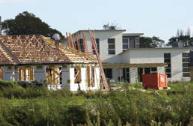
The 655 section residential
development at Huntington
commenced in 2001, and
was identifed as a high
priority for future development
(along with TGH offces
and rationalisation of non
performing assets).
However, a number of other
early business ventures failed
due to inadequate systems
and processes, and some $40
million was lost. While banks
had earlier lent money to TGH,
they were now reluctant to
renew debt facilities.
Rebuilding
2003-2006
The tribe took stock, and
in 2002 John Spencer was
approached to advise on a
new direction. TGH took over
all commercial assets, as up
till then some had been held
under other structures. The
settlement included over
450 property titles, but some
were little more than roadside
strips, so a full stock-take was
required.
A Board ‘charter’ was
eventually written for the
company, providing for
six directors – three tribal
appointees and three
independents. The charter
stipulated that one of the
independent directors must
be the Chairman. Board
processes were reviewed,
and governance standards
established, based on the
nine principles set down in
the Securities Commission
guidelines (now the Financial
Markets Authority). New
Board appointments were
made, including the Hon.
Koro Wetere, and John
Spencer became Chairman.
A new management structure
was established.
“The most important task
was to restore the confdence
of lenders. Without the ability
to borrow, the company
wouldn’t be able to proceed
with developments such as
. This meant at least
three years of TGH proving it
could live within its means,”
says Spencer.
The only way to achieve
this was to sell assets and
establish a pool of funds.
“This was a diffcult time,”
says Spencer. “Having just
had their land returned,
and given their ancestral
connections to it, the
tribe was faced with hard
2003
Restructured
management
team commence
John Spencer appointed
as TGH’s Chairman
Huntington development
commences
2004
Ownership of
commercial assets
transferred from the
Shareholder to TGH
Raukura Moana Seafoods
ceased harvesting and
selling fsh
construction
commences