
“It’s been extremely rewarding,” he says.
“I’m hugely satisfed with what TGH has
been able to achieve, and have absolutely
no regrets.”
TGH pretty much runs itself these days,
he says. “It’s a well-oiled machine and I’ve
been able to be more hands-off.”
Things were a little different when he frst
started, and it was largely a full-time job
for the frst few years.
Before joining TGH he was working in
Dunedin, having fnished up as CEO of NZ
Dairy Group following the merger of NZ
Dairy and Kiwi Co-op to form Fonterra.
He was approached to go onto the TGH
Board, and agreed to think about it.
Spencer’s frst move was to ask to become
a Director of a Ngai Tahu Holdings Group
subsidiary so he could learn what was
involved in governance of an iwi-owned
company.
Taking on a new challenge
After discussions with Waikato-Tainui and
a number of advisors, Spencer accepted
the role in 2002, becoming not just an
independent Director but Chairman as well.
Crucial to his acceptance was Rob McLeod
and Koro Wetere agreeing to join him.
“I took it on because I saw it as a personal
challenge. I wanted to prove that proper
governance structures work for everyone,
regardless of race, creed or activity.”
Others saw it differently, and he was initially
taken aback by some of their reactions.
“Two days after the announcement,
for example, someone said to me, “So
they fnally got to the S’s I see.” (S’s as in
Spencer).
“One of the things that has kept me here
and spurred me on was those early
negative comments I got.”
Keys to success
Looking back, he says the initial losses
that the tribe suffered were in many ways
a blessing in disguise.
“They allowed a framework to be created.
Your board and company policies on
day one might only be few in number,
but they grow. The key is to put them
down in writing. A key document in the
beginning was the adoption of a Board
Charter which clearly set out the duties
and powers of the TGH Board and its
relationship with its Shareholder.
“If you set proper standards, people
want to reach those standards, and over
time they get higher and higher. It’s
important to never be satisfed.You should
always want to do better next time.”
As Chairman, Spencer has always asked
for honesty and contribution in the
Boardroom. “Team chemistry and mutual
respect is extremely important.You don’t
get openness without it.
“At TGH the senior management team
attends Board meetings. The lines are clear,
but the question always is, ‘Where are
we going and what is the best way to get
there?’ The only time senior management
is not present is when we’re discussing
remuneration or sensitive tribal issues.”
There is a ffty-ffty split of independent
and tribally appointed Directors on the
Board, but he says they’ve never had to
take a vote. Decisions have always been
unanimous.
Spencer refects that over the last ten
years attitudes have gradually changed
toward the company, and today he
receives numerous calls from people
wanting to be involved with TGH.
“That’s because we’ve got the runs on
the board and more people have come
to understand the very important role iwi
commercial companies will play in the
future prosperity of the country.
The future
Spencer sees TGH’s strengths today as its
structure, its governance, the quality of its
people and a clear vision of what it wants
to achieve.
“What we’ve tried to do is set in place
enduring value for the company and the
tribe, and the thing I’m really proud of is
the people. This team could do anything.”
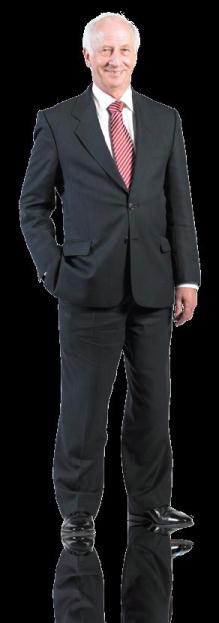
John Spencer
Proving the worth
of good governance
John Spencer retires
on 30 June 2012 as an
independent Director.
He has spent the last
decade onthe Board,
and has been Chairman
throughout.
4 7
Tainui Group Holdings
Annual Report
2012