
3 1
Tainui Group Holdings
Annual Report
2012
Experienced partnership
delivers results
The Huntington subdivision in Hamilton is nearly
complete, with 630 of the 655 sections sold.
Developed by a 50/50 joint venture (JV) between
TGH and Callum Brae Limited, it’s been an important
source of revenue for TGH, especially in its early years.
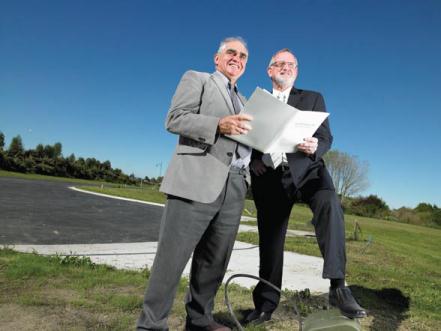
Malcolm MacDonald and David Lugton have been the
driving force behind Callum Brae Tainui.
Malcolm grew up in a farming family, trained as
a quantity surveyor, and has been farming in a
signifcant way since that time. At the time that
two Macdonald farms came into the city, the family
became directly involved in residential section
possible. There was also demand for a venue for short
1-2 day business sessions.”
When he became CEO, he formed a new
management team with a very commercial focus, and
the project was pushed up the priority list.
TGH recommended hotel operator Accor as a partner
on the back of their pre-existing relationship in
Hamilton, and TGH led the development.
“TGH were good at driving to the right outcome. We
saw a very adept team at work,” says Moutter. “They
have a very commercial structure and leadership
team, and have proven to be good co-investors.”
“They were on the same page as us in wanting an
effcient and effective hotel. At the same time we all
shared a strong commitment to representing New
Zealand andWaikato-Tainuitanga well in the project.”
Moutter says the airport company is thrilled with the
end result.
“The three partners have defnitely created a beautiful
building. The ft-out is of high quality and there is a lot
of New Zealand in it. We all wanted a quality outcome
that New Zealanders would be proud of.”
development. David trained as a valuer before joining
the well-known family real estate business, where he is
now the Managing Director.
Since 1995, they have undertaken eight residential
developments. Malcolm handles the planning,
construction and contractor management. David and
his team of specialist section salespeople handle the
marketing side.
Huntington has been one of the city’s most successful
subdivisions, having outsold its competitors most
years since sales started in 2001, averaging 60
sections per annum.
In part this was down to its desirable location, with
gully aspects. However, a key ingredient was also
stringent building covenants applied to each section,
which were carefully monitored. These obligated
section owners to build quality, well-designed homes,
with good fencing. Another was ensuring a balance
of supply and demand, so the number of sections for
sale at any one time was managed.
Careful timing
While sales fell following the 2008 downturn,
Huntington did so by less than other subdivisions. The
JV also put in infrastructure for 40 sections at the time,
so it was six months ahead of the market when sales
picked up again.
Careful risk management also played its part.
“We’ve never over-capitalised ourselves,” says Malcolm.
“We could’ve done 15 subdivisions over the years
instead of eight, but have always lived within our means.”
Through Huntington, the pair say they and TGH have
developed mutual trust and respect, and now have a
valuable relationship.
“It’s like a marriage.You go through good and bad
times together, and come out all the stronger for it.”
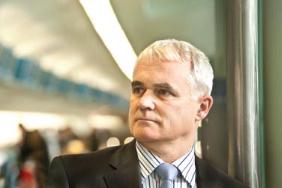
CEO Simon Moutter
MalcolmMacDonald and David Lugton