

3 0
Owners’ relationships create
positive workplace
Many people will be familiar with Novotel, Ibis,
Pullman and Softel hotels. Fewer will know about
the company that owns these brands, the
It operates 4,400 hotels in 92 countries, and
employs some 180,000 staff. In most cases
has
a management contract or has franchised the brand,
and the hotels themselves are owned by local or
international investors.
ssociation with TGH started with the
nd
n Hamilton, and this year
the relationship expanded to include the Novotel
Auckland Airport hotel, built in conjunction with
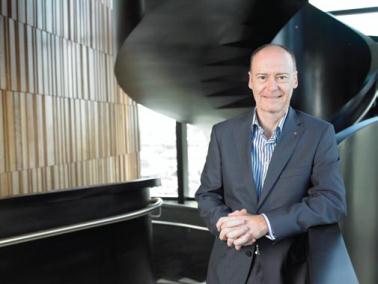
Paul Richardson,
ice-President, New
Zealand and Fiji, was an integral part of the team that
developed the Novotel Auckland Airport.
“As a hotelier it was a great project to be involved
in. The whole process with TGH and the Airport
was managed extraordinarily professionally, and
the accolades we’ve received from just about every
quarter have been very, very satisfying.”
The hotel has won both Auckland and national
architectural awards and is a contestant in the annual
Property Council of New Zealand awards.
“What made it work is that all three partners had the
Making New Zealand proud
CEO Simon Moutter
says the company already had the idea of an airport
hotel on its books before he joined in 2008.
“We’re a hub airport, so there was plenty of demand
for short-stay accommodation. We’ve got main centre
traffc, and trans-Tasman fights that depart early and
arrive late, so same day connections aren’t always
same goals and aspirations,” he says. “We all worked
together to produce a product that would create a
stunning frst and last impression of New Zealand, and
be an economic proposition as well.
“Many hotels are not built that way. A lot start off with
dreams of grandeur and want to build an ode to
that. Then half-way through the money starts to get
tight, shortcuts are taken and the original goals not
achieved.”
“What we’ve managed to do here is deliver a four and
a half star hotel at a commercially viable price.”
“For me professionally it was inspiring and very
satisfying to come up with the end product that we did.”
While involved from the start on the location, design
and layout of the hotel, the
team also had the
job of staffng the hotel.
“We were particularly looking for interest from south
Auckland and Tainui territory, and we opened with
about 30-40% of staff from those areas. We also
worked with the Ministry of Social Development and
their Job Start programme, and about 20-30 people
came through that.”
Today, between 120-150 staff work at the hotel,
depending on occupancy and use of the meeting
facilities.
“So yes, we’re getting a return on our investment, but
we’ve achieved other goals as well. We now have one
of the best international gateway hotels in the world and
have created employment in South Auckland.”
Since opening nearly a year ago, there have been
some pleasant surprises, including a large number
of Aucklanders using the hotel, as well as local
businesses using the meeting facilities.
Richardson says that the very positive relationship
the three partners in the hotel have spills through and
creates a positive environment in the hotel.
“The feedback from staff and guests has been
fantastic. If you go into the hotel there’s nothing
negative, it’s all positive. It shows that the culture of a
place can be impacted by the owners’ relationships. I
can’t emphasise that enough.”
Paul Richardson,
ice-President, New Zealand and Fiji
Creating effective partnerships
has been an invaluable
component of TGH’s business
strategy. Five organisations
whom the company currently
works with are profled here.
partnerships